
Dance Etiquette
navigating the world of social dance
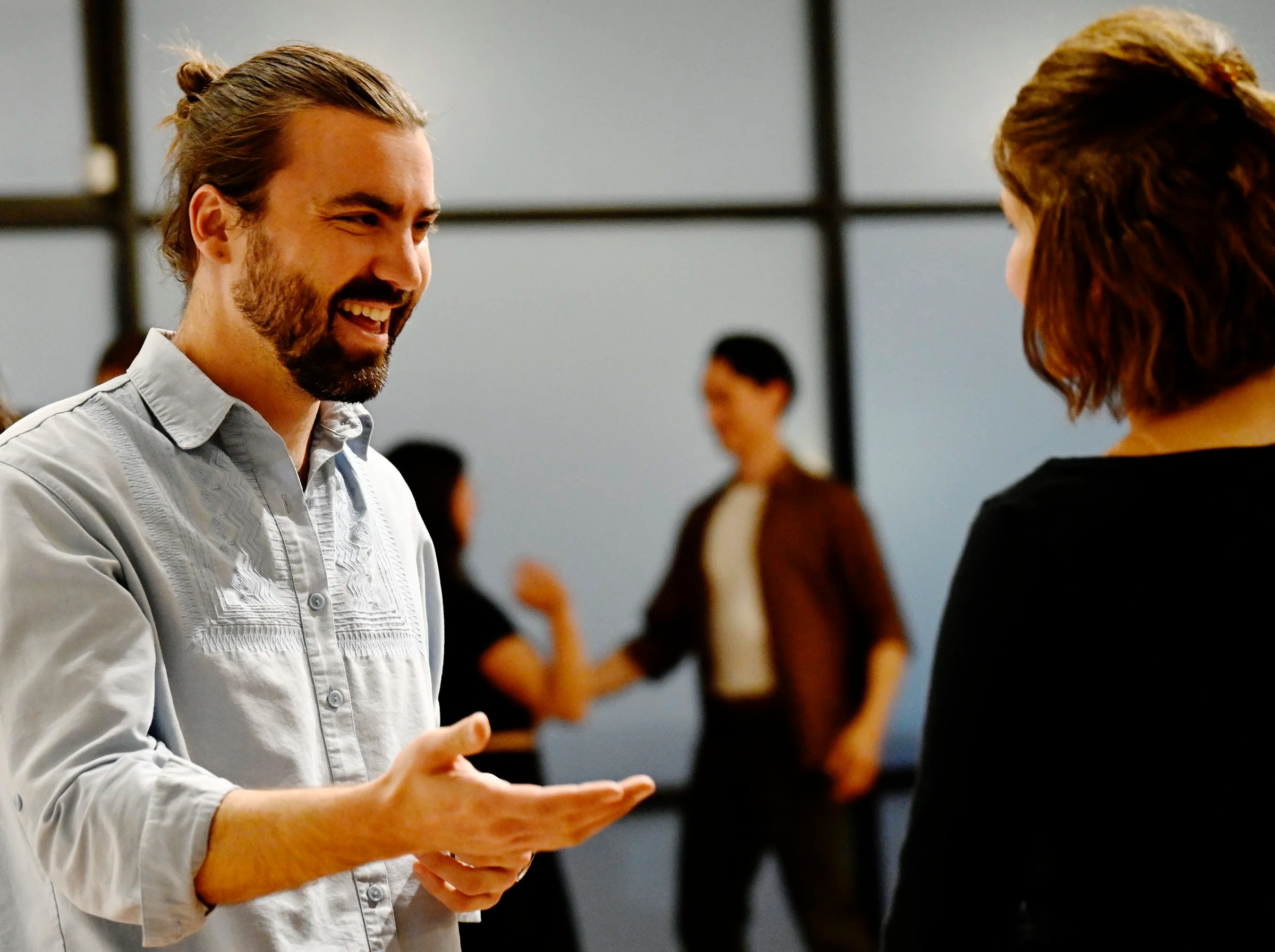
Starting a social/partner dance can be an overwhelming experience, especially once you leave the classroom and venture out to socials and events. It may feel like there are tons of unspoken rules and social norms that you’re doing your best to follow — but they can be hard to understand without a guide!
So we’ve put together some tips to help you navigate your first salsa & bachata socials with ease:
-
Firstly, it’s important to note that anyone may ask another dancer to dance. Follows and leads alike will ask for dances, and the simple truth is, the more comfortable you become with asking (and the possibility of receiving a “no”) the more time you’ll spend on the dance floor!
How to approach a potential dance partner:
The clearest way to ask someone to dance is to find someone who is sitting or standing near the dance floor and walk up to them. Make eye contact and then simply ask, “Hi, would you like to dance?" If it’s very loud, you can also extend your hand with the palm up as a non-verbal invitation to dance. It’s as easy as that! If they say yes, you can gently take their hand and walk with them to a clear spot on the floor.You may also ask people who are already on the dance floor. This may happen when a song ends, you say thank you to your partner, and then turn to see someone else finishing their dance. Give them a moment to say goodbye to the person they were dancing with, and then you can repeat the steps above, extending a hand and/or asking them verbally if they would like to dance.
If they say “no,” that’s ok! DON’T TAKE IT PERSONALLY! There are many reasons someone may decline a dance (see next section) and it usually has little to do with you. Instead, gracefully move on. Another person’s “no” is a not a reflection on your worth.
A few things to avoid:
1) In general, try not approach and touch someone from behind. It can be tempting to reach out and tap someone’s shoulder while they’re looking or walking away, but it’s a good rule of thumb to instead approach from a place that they can see you. This can be particularly impactful for folks who have experienced trauma, so keep in mind that small details like this can make a big difference in your partner’s sense of safety.2) Do not assume they will say yes! Do not grab anyone or pull them towards you assuming they would like to dance.
-
There will be times that you do not want to dance when asked. Maybe you are resting. Maybe your back started hurting. Maybe you are enjoying a chat with a friend. Maybe you don’t enjoy dancing with the person who asked you. Maybe you are waiting to dance with someone else next. You can always decline a dance, no explanation needed. The simplest way to do this is to smile and say “No, thank you.” Again, no explanation needed.
If you are resting or already have committed to someone else for the next dance, but would be open to dancing later, you can say that! “I’m resting now but let’s dance later!” or “I’m dancing with my friend next but I’ll find you after.” Bonus points if you really do find this person later in the night and ask them to dance.
You can even decline a dance after it has begun. If you start dancing with someone and you feel unsafe or uncomfortable with them, or for any other reason need to leave the dance, you can do so even if the song has not ended. A simple, "thank you so much,” before you walk away can indicate that you are finished dancing. In instances where you feel your safety or consent have been violated, you have the option to submit an Incident Report to alert the HD Latin Dance team of what happened.
-
When leading:
Do not lead your follow into techniques that they have not yet learned; you can check in verbally before a dance if you’re unsure of your partner’s level (ex: “Are you comfortable with head movement?”).
Pay attention to your follow’s range of movement and do not force them into moves that strain them, being especially mindful of the spine, shoulders, and neck.
Do NOT attempt lifts or tricks on the social floor.
Always be mindful of who and what is around you; do your best to avoid collisions with other dancers and be mindful of walls, poles, and other obstructions.
When following:
Hold up your own weight, don’t relax all of your weight onto your partner and rely on them to keep you up.
Be mindful of where your limbs are, especially when turning and styling; it’s your responsibility to ensure you don’t hit your partner or nearby dancers.
Do not put yourself into dips, cambrés or head movement; this can be very dangerous if your partner is not ready to support you, and could result in injury.
Everyone:
Do not grab or squeeze your partner. Be mindful of the amount of force in your connection.
Practice stating your needs! If you are injured, let your partner know, ideally before dancing. If your partner attempts a move you don’t want to do for any reason, you can decline the move, with the option to offer a quick explanation (ex: “Oh please no cambrés, my back isn’t feeling great.”).
When we ALL look out for each other, we all benefit. Be mindful of your surroundings and do your best to avoid collisions.
If you are feeling unsafe for any reason, you can always end the dance — yes, even if the song is not over! A simple, “Thank you so much,” before you leave the dance can indicate you are done.
See our Code of Conduct for more guidelines for safety and consent at our events.
-
Remember that saying “yes” to a dance does not mean saying “yes” to all types of touch and connection.
All dancers should be mindful that others may have different comfort levels when it comes to close embrace and physical touch.
Never force your partner into a close embrace.
If you’re unsure if your partner is comfortable with close embrace, you can always inquire with a simple, “Are you comfortable with close embrace?” — easy!
Always make allowances for your partner to leave close embrace. Take note if they are pulling away, placing a hand on the front of your shoulder, or making other non-verbal indications that they do not want to be in a close connection.
Do not touch your partner inappropriately. The lower back, neck, face, hair, and chest are intimate areas and should only ever be touched by people with whom you have an established friendship or relationship. Genitals, breasts, and buttocks, should never be touched on the dance floor.*
*You may experience genuine accidents in which your parter inadvertently touches you in a place you did not want to be touched. They may realize this and apologize, they may be so freaked out that they are scared to even mention it, or they may not even notice. The truth is that honest mistakes do happen. That being said, use your judgement and remember you can always leave a dance if you feel uncomfortable.
See our Code of Conduct for more guidelines for safety and consent at our events.
-
When we go social dancing, we will be in close contact with many people throughout the night. So it’s important to be mindful of one’s own hygiene so your partners feel comfortable in your presence.
This can look like:
brushing your teeth and using mouthwash before the social
avoiding foods with lots of garlic and onions prior to dancing
arriving in clean clothing
using deodorant/antiperspirant
if you are a sweaty person, bring a small towel and one or more extra shirts to change into throughout the night
A note on fragrances: Many people are very sensitive to strong smells. So while your first instinct may be to use a lot of cologne or perfume, the best solution may be to simply arrive clean and use a good deodorant/antiperspirant.
-
In partner dances like Sensual Bachata, we use close embrace, in which dancers have hip to hip contact with one another.
As you can imagine, it’s important for anyone with front pockets to keep them empty while dancing. Pointy car keys and bulky wallets can get in the way of a comfortable hip connection. Leaders should keep their right pockets empty, and followers should keep their left pockets empty.
MALE-BODIED LEADS, make sure you move everything to the left.
-
Socials are a place to practice your dancing and enjoy the results of all your hard work in class.
By default, they are not places to learn new moves or to offer feedback on other peoples’ dancing.
As a rule, we do not ask people to teach us moves on the dance floor. There can be exceptions to this, but in general do not expect your dance partner to take time out of their evening to teach you. One common exception you may see is more advanced dancers or teachers taking time to introduce brand new dancers to some basic moves.
Just as we do not ask others to teach us on the dance floor, we also do not give unsolicited constructive critique to others. The social setting is not the same as a class room setting, in which we encourage everyone to offer kind, constructive feedback after getting their partner’s consent (ex: “Are you open to some feedback right now?”). So please refrain from offering feedback or “advice” to others during socials.